Under this section, the auditor perform the audit procedures to ensure and confirm Existence of the accounts payable. Under this section, the auditor perform the audit procedures to ensure and confirm completeness of the accounts payable. The cause of the increase in accounts payable (and cash flows) is the increase in days payable outstanding, which increases from 110 days to 135 days under the same time span.

Better inventory management
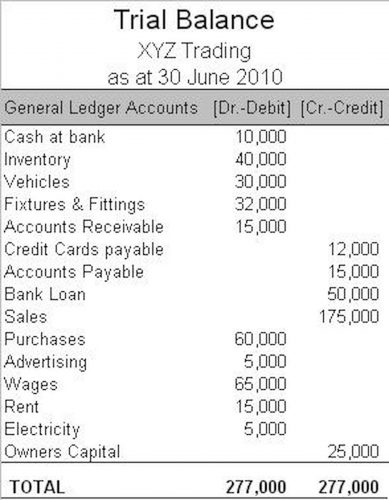
From the perspective of financial controllers, the focus is shifting towards optimizing payment terms to balance liquidity with supplier relationships. For instance, extended payment terms may improve a company’s cash position in the short term, but could strain supplier relations and lead to higher costs or disrupted supply chains in the long run. These case studies demonstrate that with the right strategies and tools, payables optimization can contribute significantly to a company’s financial health and operational efficiency.
- It is like a list of all the bills your business needs to pay within the next month or quarter.
- This form of short-term debt is crucial for maintaining liquidity, as it allows businesses to use the funds that would otherwise be tied up in immediate payments for other operational needs.
- A business might hire an IT company to maintain its systems, receive the service and get a bill payable in 45 days.
- For example, the purchased items could have arrived in poor condition or the wrong quantity could have been sent.
- Maintaining a healthy relationship with suppliers is vital for long-term business success.
- Tipalti uses automation and machine learning to make managing the deluge of invoices simpler, while reducing errors and missed payments.
Better visibility through financial ratios
- The auditor should select sample of vouchers and verify the date on the vouchers to ensure that the transactions have recorded in the correct period.
- Large balances of trade payables mean lower credit ratings placed by the evaluators on the company.
- These systems reduce manual errors, speed up processes, and provide better visibility into payables status.
- Whether for a small retailer or a multinational corporation, effective accounts payable management is essential for long-term success.
- Accounts payable represents the money a company owes to others, while accounts receivable reflects money owed to the company by its customers.
- This can be particularly beneficial for businesses that have a longer cash conversion cycle.
To learn more about managing overall payables, contribution margin explore our detailed guide on accounts payable. Trade Payables play a key role in managing daily expenses and keeping business operations smooth. When tracked properly and paid on time, they support healthy cash flow and strong supplier relationships. By staying organised, reducing errors and planning ahead, businesses can strengthen their financial stability and work confidently toward future growth.
Accounts Payable and Cash Flow Management
- Strong business relationships between the two could benefit the company and a vendor might offer relaxed credit terms.
- It is worth noting that the classification of trade accounts payables is ‘current liabilities’ since they are payable within a year.
- Join our community to get finance, operations, and procurement resources straight to your inbox.
- The payment terms mentioned in the invoices must be suitable for maintaining cash flow in your company.
- Together, they provide a view of the company’s cash flow and short-term financial health.
- Reconcile with the general ledger – Compare your tracker or sub-ledger with the general ledger to ensure all entries match.
- The obligation is recorded immediately upon receipt of the invoice and verification of the goods.
It also helps businesses stay aware of deadlines and avoid penalties or extra charges caused trade payables by missed payments. Managing cash flow becomes smoother when businesses track due payments, maintain enough cash for daily needs, and manage expenses effectively to support uninterrupted operations. Good management of trade payables allows a business to optimise cash flow by delaying payments until they fall due, and even extend the payment terms if possible. Late vendor payments risk causing disruptions in the supply chain and cash flow.
How Summit can help manage trade payables
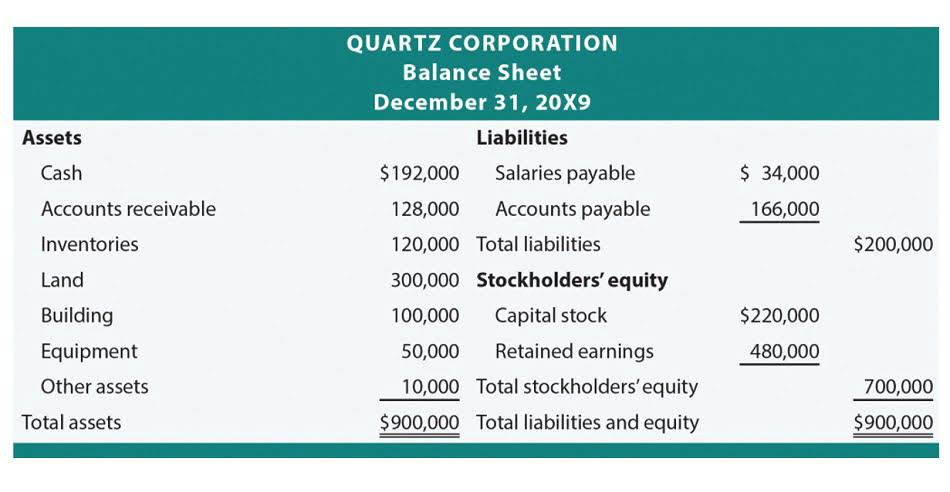
In this blog, we’ll break down what trade payables mean in accounting, how they’re recorded, and why they matter. With simple examples and best practices, you’ll walk away knowing exactly how to track, manage, and optimize trade payables in your business. Individuals new to the world of finance often think that accounts and trade payables are the same thing.

The AP turnover ratio is a short-term measure of liquidity that tracks the rate at which a company settles its accounts payable, reflecting the company’s ability to manage its short-term obligations. In short, a higher days payable outstanding (DPO) is often indicative of a company’s operations becoming more efficient, since its free cash flow (FCF) improves. Non-trade payables are company obligations that are not directly related to core operational activities but still need to be settled. These payables often arise from transactions outside the scope of the company’s primary business activities. Given the A/P turnover ratio of 4.0x, we will now calculate the days payable outstanding (DPO) – or “accounts payable turnover in days” – from that starting point.
- Other payables are the best examples of indirect expenses, such as Repairs and maintenance, Security expenses, Telephone charges, electricity expenses, broadband charges, and periodicals.
- It allows you to determine which period to apply the related payables and whether it belongs to the previous one.
- Manual ErrorsIn manual setups, missed entries or duplicate records can lead to payment delays and reconciliation issues.
- In some companies, one specific accountant may be responsible for all accounts payable.
- They are typically responsible for more than just paying incoming bills and invoices.
To know more about how you can manage your financial operations better, you can Book a Demo or Take a Free Trial with FinFloh. Try BILL to see how it can help you master your payables process and save you from extra manual steps. A coffee shop has one supplier that they use for beans, single-use cups, and equipment. Some retail goods with high inventory turnover, like soap, may be paid off monthly. Slower moving or more expensive products, like vehicles, might be on an annual schedule. Trade payable is derecognized when the payment is made, or we can say the liability is discharged when the payment is made.
How to Become a Financial Manager: Skills and Qualifications

AP includes all operational expenses, while TP focuses on raw materials and inventory. Supply chain managers, on the other hand, are increasingly recognizing the value of trade payables as a tool for ensuring supply chain resilience. By leveraging trade credit, businesses can navigate short-term disruptions Opening Entry without compromising their operational capabilities.